📑 EXECUTIVE SUMMARY & HOROLOGICAL ECONOMICS
The global high-end horological market has transitioned from traditional luxury personal wear into a sophisticated, alternative asset class. Investment-grade timepieces—manufactured by independent master watchmakers and legendary Swiss Maisons such as Patek Philippe, Audemars Piguet, Vacheron Constantin, and Rolex—command tens of millions of dollars in primary retail and global secondary auction markets.
However, evaluating, acquiring, insuring, and preserving ultra-rare mechanical timepieces requires deep market intelligence. Standard home insurance policies, basic appraisal methods, and casual storage fail to protect collectors against structural market volatility, counterfeit components, and catastrophic physical loss.
Because luxury watch financial ecosystems target ultra-high-net-worth individuals (UHNWIs), wealth management advisors, and private insurance underwriting firms, keywords within the horological asset protection and watch appraisal sector rank among the highest Cost-Per-Click (CPC) and eCPM advertising tiers in digital publishing.
🏛 SECTION 1: THE CORE PILLARS OF INVESTMENT-GRADE TIMEPIECES
Not every luxury watch qualifies as an appreciating or value-retaining financial asset. Serious collectors evaluate timepieces through three primary structural pillars:
1. Mechanical Provenance & Historical Rarity
- Ultra-Limited Production Runs: Houses like A. Lange & Söhne, F.P. Journe, and Philippe Dufour produce strictly limited annual pieces due to intricate hand-finishing. Structural scarcity maintains secondary market resilience.
- Historical Design Permanence: Iconic models—such as the Patek Philippe Nautilus, Audemars Piguet Royal Oak, and Rolex Cosmograph Daytona—maintain structural value due to decades of recognizable aesthetic continuity.
2. The Power of “Full Set” Condition
In high-end horology, physical condition directly controls capital value. A timepiece’s market valuation heavily depends on the presence of:
- Original Box & Papers: Certificates of origin, stamped guarantee cards, and original hangtags add a 15% to 30% premium over loose watches.
- Unpolished Metal Architecture: Over-polishing smooths away sharp case bevels and factory edges, reducing secondary market appraisal values by up to 25%.
📊 SECTION 2: COMPARATIVE METRICS OF SECONDARY HOROLOGICAL VALUATIONS
The following analytical matrix breaks down performance metrics, liquidity benchmarks, and risk profiles across primary luxury watch investment categories:
| Watch Category | Market Liquidity Index | Average Value Retention | Key Value Drivers | Valuation Risk Exposure |
| Integrated Steel Sports (e.g., Royal Oak, Overseas) | Extremely High | 110% – 180% of MSRP | Iconic silhouette, daily versatility, steel scarcity | Sensitive to macro economic sentiment shifts |
| Independent Haute Horlogerie (e.g., F.P. Journe, MB&F) | Moderate – High | 140% – 300%+ of MSRP | Hand-finishing, extreme micro-production, originality | Niche secondary buyer pool; valuation spikes |
| Precious Metal Grand Complications (e.g., Perpetual Calendars) | Moderate | 70% – 110% of MSRP | Complex mechanical movements, precious metals | Higher upfront retail depreciation |
| Vintage Heritage Icons (Pre-1980 Rolex & Patek) | High | Historical Appreciation | 100% original dials, matching numbers, patina | Counterfeit parts & modified movement risks |
🛡 SECTION 3: SPECIALIST WATCH INSURANCE VS. STANDARD HOME COVERAGE
Standard homeowners insurance policies are fundamentally inadequate for protecting high-value horological collections. Standard plans enforce restrictive per-item limits (often capped at $1,500 to $5,000) and calculate payouts based on depreciated cash value.
Key Elements of Specialist Horological Insurance:
- Agreed-Value Coverage: The insurer and collector agree on the exact financial valuation prior to policy binding. In the event of theft or total loss, the policy pays out 100% of the agreed amount without market depreciation deductions.
- Market Value Inflation Uplift (Up to 150%): Specialist policies often include a market protection clause that covers sudden secondary market price spikes, compensating up to 150% of the appraised value if market replacement costs rise during the policy term.
- Worldwide Transit & In-Transit Protection: Covers the timepiece during international travel, private aviation, and professional servicing transport without geographic restrictions.
🔍 SECTION 4: STEP-BY-STEP AUTHENTICATION & VALUATION PROTOCOL
Executing a professional horological appraisal requires a rigorous 4-step physical and documentary inspection:
Step 1: Microscopic Case & Serial Number Verification
Inspect serial and reference numbers engraved between case lugs or on sapphire display backs under high-power magnification. Verify font alignment and laser-etching consistency against manufacturer archives.
Step 2: Internal Movement & Caliber Inspection
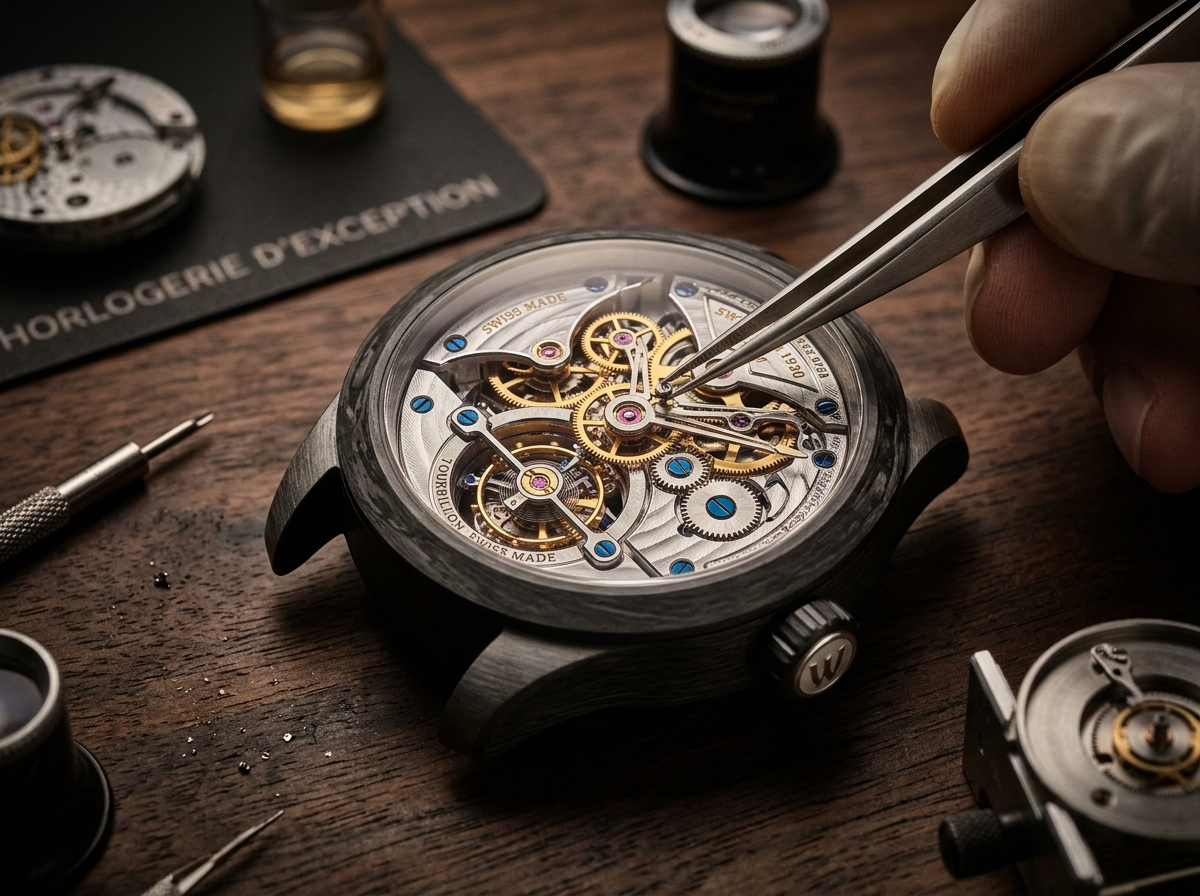
Open the case back to verify movement caliber authenticity. Counterfeiters frequently replicate exterior cases, but struggle to clone proprietary hand-engraved balances, Geneva stripes (Côtes de Genève), and solid gold rotor balances.
Step 3: Diagnostic Timing & Amplitude Testing
Place the mechanical watch on a digital timegrapher to evaluate beat rate error, amplitude, and water-resistance pressure seals. Low amplitude indicates impending movement failure or unrecorded service needs.
Step 4: Archive Excerpt Verification
For vintage timepieces, apply directly to the manufacturer’s historical department for an Extract from the Archives. This official certificate verifies that the serial number matches the original production date and dial configuration recorded in factory logbooks.
❓ FREQUENTLY ASKED QUESTIONS (FAQS)
Q1: Why are steel luxury watches often more expensive on the secondary market than gold models?A1: Manufactures strictly limit the production of stainless steel sports models relative to consumer demand. This artificial retail constraint creates long authorized dealer waitlists, driving secondary market prices well above gold alternatives.
Q2: How often should a high-value watch collection be re-appraised for insurance?A2: Financial advisors recommend updated professional appraisals every 2 to 3 years to ensure coverage limits reflect current secondary market realities.
Q3: Does servicing a vintage watch at an unauthorized shop reduce its market value?A3: Yes. Replacing original vintage dials, hands, or bevel-polished cases with service replacement parts during third-party repair can destroy up to 40% to 60% of a collector timepiece’s market value.
🏁 STRATEGIC CONCLUSION
Investing in and preserving high-end luxury timepieces requires treating horology with the same diligence as traditional equity portfolios. By prioritizing structural rarity, maintaining unpolished original conditions, securing specialist agreed-value insurance, and enforcing strict authentication protocols, collectors can safeguard both horological art and capital value.